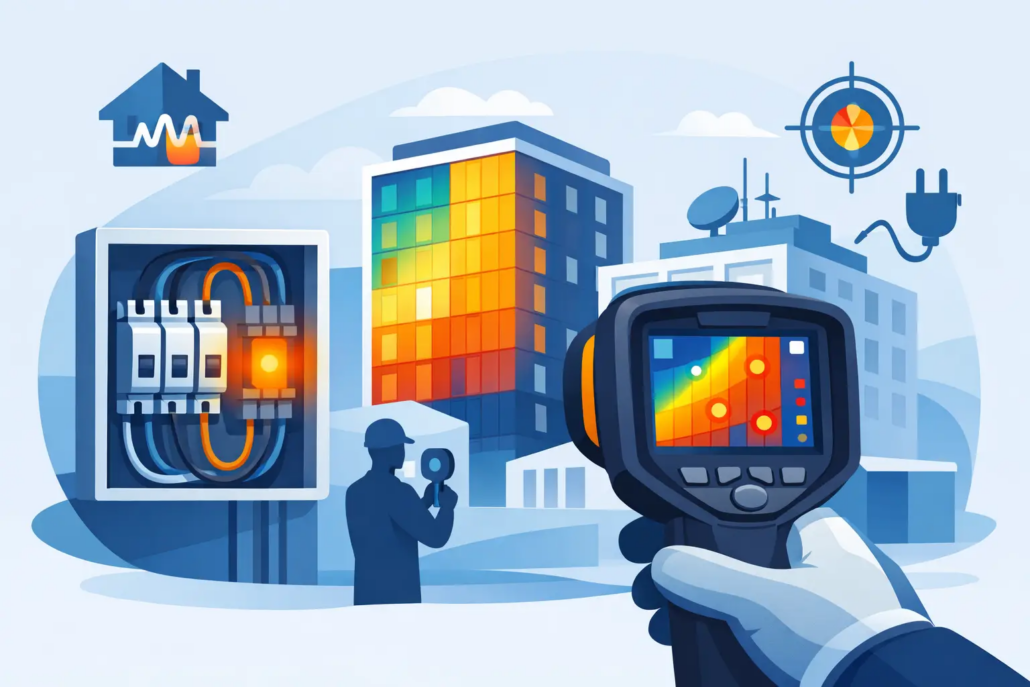
Electrical Thermography Inspection for Buildings
A breaker can appear normal from the outside while a loose lug, overloaded circuit, or deteriorating connection builds heat behind the panel cover. That is the value of an electrical thermography inspection for buildings: it identifies abnormal heat patterns before they become an outage, equipment failure, or fire event. For owners and managers responsible for commercial and multifamily properties, the inspection provides actionable evidence for planning repairs with greater confidence.
What an Electrical Thermography Inspection Reveals
Electrical thermography uses an infrared camera to measure and display surface-temperature differences in energized electrical equipment. Components with elevated temperatures often indicate excess resistance, excessive load, poor connections, phase imbalance, corrosion, or failing parts. A qualified inspector reviews those readings in context rather than treating every warm component as a defect.
The inspection commonly includes main service equipment, switchgear, panelboards, disconnects, transformers, motor control centers, distribution equipment, conductors, breakers, fuses, and accessible terminations. In a multifamily property, that may include common-area panels, house meters, pool equipment, elevator-related electrical components, and mechanical-system disconnects. In commercial facilities, the review may extend to kitchen equipment, HVAC distribution, pumps, process equipment, and tenant electrical rooms.
The camera does not see through enclosure doors, walls, or insulation. Panels generally must be opened by qualified personnel under appropriate electrical safety procedures, and the equipment needs to be operating under meaningful load for the results to be useful. A low-load inspection can miss a connection that only overheats during peak demand.
Why Building Owners Use Thermography
Electrical defects rarely announce themselves on a convenient schedule. A failing connection may run hot for months, then fail when air-conditioning demand, occupancy, or equipment use rises. The resulting interruption can affect tenants, operations, life-safety systems, and lease obligations, while emergency repairs often cost more than planned corrective work.
Thermography supports a more disciplined maintenance strategy. It helps a property team prioritize conditions based on observed temperature differentials, equipment criticality, loading, and the potential consequence of failure. A hot branch breaker serving a minor storage area is not managed the same way as a hot feeder connection supplying a fire pump, elevator, emergency system, or central HVAC equipment.
For Florida properties, electrical reliability is closely tied to heat, humidity, salt-air exposure in coastal areas, and sustained cooling loads. Corrosion, moisture intrusion, aging equipment, and deferred maintenance can increase resistance at electrical connections. Infrared findings can reveal where further investigation is justified before a visible failure affects building operations.
A thermographic survey also creates useful documentation. Clear images, equipment identification, observed temperatures, load conditions, and recommended corrective actions give owners a defensible record of proactive maintenance. That record can support capital planning, contractor scope development, insurance discussions, internal risk management, and communication with condominium or HOA boards.
Electrical Thermography Inspection for Buildings Is Not a Pass-Fail Test
An infrared image is a diagnostic tool, not a code compliance certificate by itself. Heat must be interpreted carefully. Some equipment is designed to operate warmer than adjacent components, while a component that appears cool may not be carrying enough load to expose a developing defect.
A sound evaluation compares similar components under comparable load conditions. For example, an inspector may compare phase conductors, adjacent breakers, matching fuse clips, or identical disconnects. The inspection should also consider equipment ratings, ambient temperature, connection type, load measurement, maintenance history, and visible signs of deterioration.
This is where licensed engineering judgment adds value. An elevated temperature may call for immediate de-energization and repair, scheduled corrective work, load balancing, torque verification, component replacement, or additional testing. The appropriate response depends on the condition and the system it serves. Replacing a breaker without identifying the underlying load or connection issue can leave the real problem unresolved.
Thermography does not replace the electrical inspections required for permits, construction milestones, building recertification work, or code-violation correction. It complements those services by giving owners another method to identify operating risks in existing equipment. When a condition points to a possible NEC or NFPA concern, the next step may include engineering review, field verification, and a properly scoped repair.
When to Schedule an Infrared Electrical Survey
The best timing depends on how the building is used. Many facilities benefit from routine annual surveys during periods of higher electrical demand, especially when HVAC systems are operating at substantial load. Seasonal businesses, hotels, warehouses, medical facilities, retail properties, and large multifamily communities may need scheduling that reflects their actual peak operations.
An inspection is particularly valuable after major electrical modifications, a panel or switchgear replacement, storm-related water exposure, recurring breaker trips, unexplained equipment shutdowns, or reports of burning odors and flickering lights. It can also be useful before purchasing an older property, beginning a major renovation, adding EV charging infrastructure, or increasing electrical loads through new mechanical equipment.
For condominiums and apartment communities, thermography can help boards and managers make decisions before a repair becomes an emergency assessment. The report can separate urgent conditions from items better addressed through a planned maintenance budget. It does not eliminate the need for repair funding, but it can reduce uncertainty about where funding should be directed first.
What a Useful Thermography Report Should Include
A report should be built for decision-making, not simply filled with colorful infrared images. Each finding should identify the equipment, location, observed condition, thermal image, corresponding visual image when practical, relevant temperature data, and the recommended action. The report should distinguish between urgent hazards, conditions needing timely repair, and observations that warrant monitoring.
The most useful reports also document inspection limitations. If equipment was inaccessible, de-energized, lightly loaded, or unsafe to open at the time of the survey, that should be clearly stated. Transparent limitations protect the owner from assuming that uninspected equipment was verified as defect-free.
Recommendations should be practical. A property manager needs to know whether to call an electrical contractor immediately, schedule work during an outage window, request load testing, or bring in an engineer for a broader assessment. For significant findings, repair verification through follow-up thermography can confirm that the corrective work resolved the abnormal heating pattern.
Managing Safety During the Inspection
Thermography is non-contact, but inspecting energized electrical equipment still carries real hazards. Accessing panels, switchgear, and other enclosures can expose personnel to shock and arc-flash risks. The inspection team should coordinate with facility staff, follow site-specific safety rules, use appropriate personal protective equipment, and avoid disrupting critical systems without a clear plan.
Owners can improve the inspection process by providing panel schedules, single-line diagrams, previous maintenance records, and access to locked electrical rooms. They should also identify critical loads, tenant constraints, operating hours, and known electrical concerns in advance. This preparation helps the inspection focus on equipment that carries the greatest operational and life-safety importance.
Where immediate hazards are identified, protecting occupants and personnel takes priority over completing the survey on schedule. A qualified professional may recommend isolating equipment, reducing load, arranging emergency repair, or taking another controlled action based on the severity of the condition.
Turn Findings Into Controlled Maintenance
The inspection delivers the most value when it leads to documented corrective action. Start by assigning responsibility for each finding, establishing a repair timeline based on risk, and retaining invoices, test results, and post-repair verification. For aging buildings, recurring surveys can also reveal whether a condition is isolated or part of a broader pattern involving loading, corrosion, outdated equipment, or maintenance gaps.
Boukzam PE Consulting approaches electrical conditions with the same goal that drives effective building engineering: clear, code-conscious decisions that protect people, preserve property value, and keep work moving. A well-timed thermographic inspection gives owners the information to address hidden electrical risk before it dictates the schedule.

