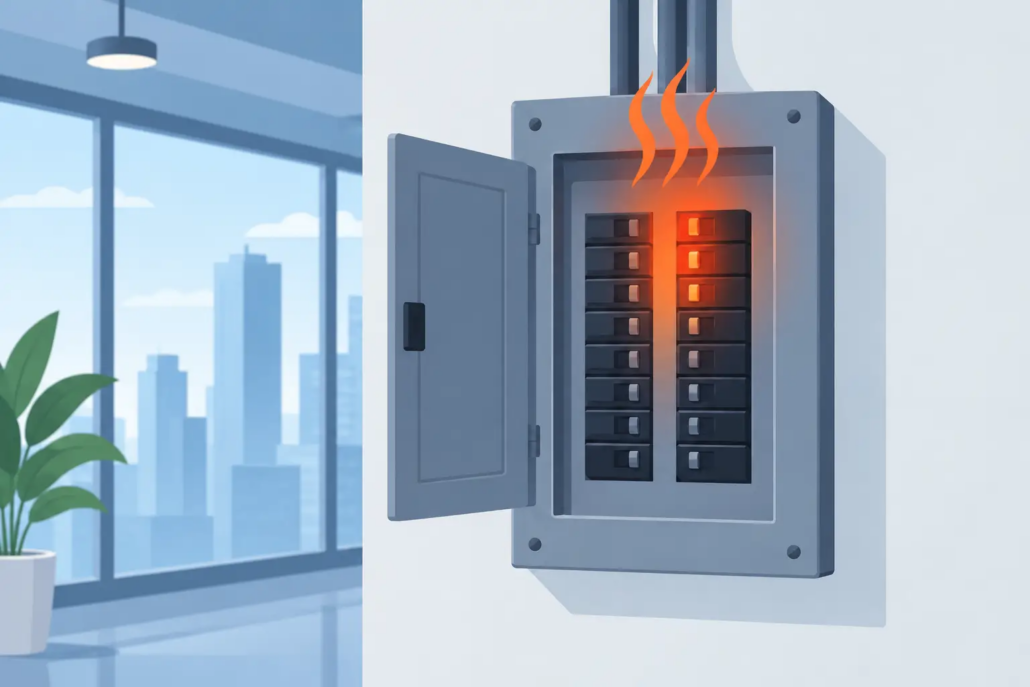
What Causes Panel Overheating in Buildings?
An electrical panel should distribute power quietly and predictably. When it runs hot, the issue is rarely limited to the panel itself. Understanding what causes panel overheating helps property owners, boards, and facility managers address developing electrical hazards before they lead to equipment damage, outages, fire risk, failed inspections, or costly emergency repairs.
Heat is a normal byproduct of electrical resistance. Excessive heat is different. It indicates that a component, connection, conductor, or load is operating outside the conditions the electrical system was designed to handle. In a commercial building, multifamily property, or aging condominium, the correct response is a qualified investigation that identifies the source rather than simply replacing a hot breaker or closing the panel door.
What Causes Panel Overheating?
Panel overheating generally results from excessive current, high-resistance connections, inadequate equipment ratings, or environmental conditions that prevent heat from dissipating. More than one condition may be present. For example, a fully loaded panel in a hot electrical room can become significantly more vulnerable when a loose termination adds resistance at one breaker or bus connection.
The severity depends on measured temperatures, panel construction, load characteristics, available ventilation, and the condition of the entire distribution system. A licensed electrical professional should evaluate the findings in the context of applicable NEC requirements, manufacturer instructions, and the building’s actual operating demand.
Loose or deteriorated electrical connections
Loose terminations are among the most common and consequential causes of overheating. A conductor that is not properly torqued at a breaker, neutral bar, lug, bus connection, disconnect, or feeder termination creates resistance. As current passes through that resistance, the connection produces heat. The heat can further degrade the connection, creating a cycle that accelerates failure.
Corrosion, oxidation, vibration, repeated thermal expansion and contraction, water intrusion, and improper installation can all compromise a connection over time. In South Florida, humidity and salt-air exposure can make corrosion control especially relevant for properties near the coast or installations with poorly protected electrical spaces.
A discolored breaker, melted insulation, burned odor, or darkened bus material should never be treated as cosmetic damage. These signs can indicate prior arcing or sustained overheating and require prompt evaluation.
Circuit overloads and changed building use
A breaker protects the circuit conductors, but a panel can still be stressed by an accumulation of demand. Overloads may occur when a building’s usage changes without a corresponding electrical capacity review. Common examples include office renovations, added kitchen equipment, tenant improvements, supplemental HVAC systems, laundry upgrades, server equipment, electric water heating, and EV charging installations.
Multifamily properties frequently face this issue as residents add high-demand appliances or as common-area systems are upgraded. A panel that was adequate when constructed may no longer be appropriate for its current load profile. Replacing individual breakers without reviewing feeder capacity, service capacity, load calculations, and demand factors can move the problem upstream rather than resolve it.
Continuous loads require particular attention. Where a load operates for three hours or more, the electrical design must account for the applicable code requirements and equipment ratings. A panel may appear acceptable during a short walk-through yet operate at elevated temperatures during peak, sustained use.
Overcrowded panels and improper modifications
Field modifications often create risks that are not apparent from the exterior of the panel. Double-tapped breakers not listed for two conductors, improperly sized breakers, incompatible replacement breakers, overcrowded wiring, unapproved tandem breakers, and conductors with damaged insulation can all affect safety and performance.
Panelboards are listed as assemblies. Their deadfront, bus rating, breaker types, wiring space, and heat dissipation characteristics are designed to work together. Installing components that are not approved for that panel can compromise the listing and introduce overheating concerns.
Improperly landed neutral or grounding conductors are also serious issues. In subpanels, neutral isolation and grounding arrangements must be correct. Shared neutrals, loose neutral terminations, and imbalanced loads can create unexpected heat and voltage problems that affect sensitive equipment as well as occupant safety.
Undersized conductors, feeders, or equipment
Conductors must be sized for the load, installation conditions, terminal temperature ratings, voltage drop considerations, and applicable derating factors. If a feeder or branch circuit is undersized, it may heat up before the protective device responds as intended. The heat can transfer to lugs, breakers, and bus components inside the panel.
Equipment selection matters as well. A panel with insufficient ampacity, inadequate interrupting rating, or inappropriate enclosure type may not be suitable for the installation. Electrical upgrades should not be planned around available physical space alone. The design must verify that the panel, feeder, overcurrent protection, service equipment, and utility conditions support the proposed load.
This is especially relevant when owners plan capital improvements. EV charging, commercial cooking equipment, pool systems, elevator modernization, and major HVAC replacements can require a coordinated capacity analysis before equipment is installed.
Heat, moisture, and poor ventilation around the panel
Electrical rooms need adequate working clearance, access, and an environment compatible with the equipment installed. Panels located in hot mechanical rooms, utility closets with little air movement, direct sun exposure, or spaces crowded with stored materials may retain excessive heat. Dust buildup can also reduce cooling and contaminate electrical components.
Moisture is a separate but related concern. Condensation, roof leaks, plumbing leaks, flood exposure, or failed enclosure seals can corrode bus bars and terminations. Water-damaged equipment may continue operating for a time, but its reliability and safe performance can be compromised. The source of moisture must be corrected along with any damaged electrical equipment.
Warning Signs That Require Action
A panel does not need to be smoking to present a problem. Heat-related failures often develop gradually, and early indicators can be found during routine maintenance, electrical inspections, or infrared scanning.
Property teams should arrange a qualified assessment when they observe repeated breaker trips, flickering lights, unexplained equipment shutdowns, buzzing or crackling sounds, hot panel covers, a burning odor, visible discoloration, melted wire insulation, or corrosion inside the enclosure. A sudden increase in utility demand, a recent renovation, or frequent tenant complaints about power quality also justifies investigation.
Do not repeatedly reset a breaker that trips or attempt to tighten energized connections. Resetting a breaker can restore power temporarily while leaving the underlying defect in place. Work inside electrical equipment can expose personnel to shock and arc-flash hazards. Restrict access, document the observations, and have qualified electrical personnel evaluate the condition.
How a Proper Electrical Assessment Finds the Root Cause
A dependable diagnosis begins with safe visual inspection and documentation of the panel, breakers, conductors, terminations, labeling, enclosure condition, and surrounding environment. The assessment should then compare the installed system with the building’s current use and available electrical capacity.
Load measurements can reveal sustained high demand, phase imbalance, overloaded feeders, or circuits that are operating near their limits. Infrared thermography, performed under meaningful load, can identify abnormal temperature differences at breakers, lugs, bus connections, and terminations. It is a valuable diagnostic tool, but it does not replace corrective design or field verification.
The next step depends on the findings. Some conditions can be corrected through properly torqued and repaired connections, replacement of damaged listed components, circuit redistribution, or improved enclosure protection. Others require new feeders, panel replacement, service upgrades, load shedding controls, or a broader electrical redesign. The appropriate solution is the one that addresses safety, code compliance, future demand, permitting needs, and the property’s budget without relying on temporary fixes.
Preventing Repeat Overheating Problems
Preventive maintenance is often less disruptive than emergency electrical work. Facilities with significant electrical demand benefit from scheduled panel inspections, load reviews after renovations, thermal scans where appropriate, clean and accessible electrical rooms, and accurate panel schedules. Records of repairs, measured loads, and prior hot spots help building decision-makers plan capital work before a small defect becomes a service interruption.
For condominium boards and owners of aging properties, electrical conditions should also be considered alongside recertification planning, HVAC replacement programs, life-safety upgrades, and future EV infrastructure. Coordinating these improvements can prevent redundant construction and reduce the risk of discovering inadequate capacity after a project is already underway.
Panel overheating is a warning that the electrical system needs attention, not a condition to monitor indefinitely. A timely, documented evaluation by qualified professionals gives owners a clear path to protect occupants, preserve equipment, and keep the property moving forward with confidence.


Leave a Reply
Want to join the discussion?Feel free to contribute!